Gen Z protests: Do Baby Boomers really have it better than young people?
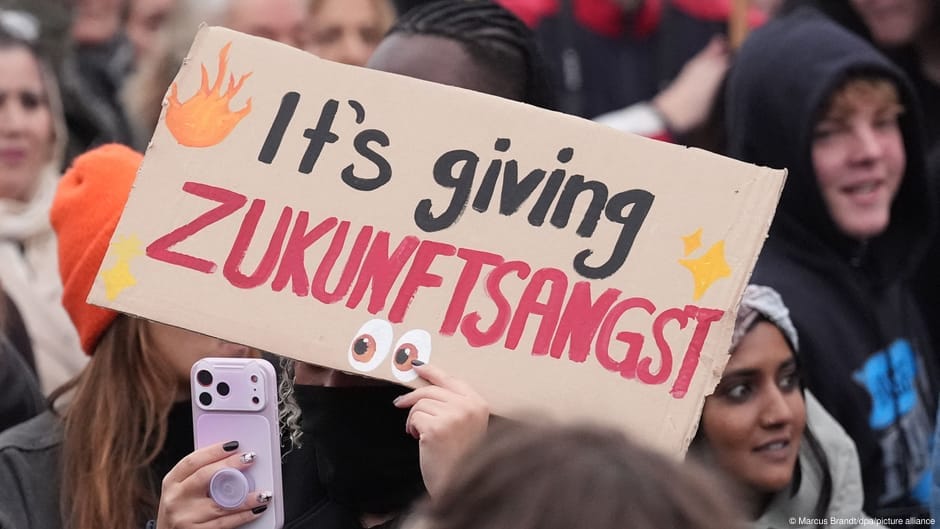
Should young people in Germany be more worried about their future than Baby Boomers were in the 1980s and 1990s? Or should both generations take to the streets and protest together? DW checked the data. But is that really the case?
Does Gen Z face greater challenges than Baby Boomers did in the 1990s? What do the two generations have in common, and where do their experiences differ? "Of course, it's fair to ask, 'Were things just as tough for you back then?'" youth researcher Simon Schnetzer tells DW. "But young people see that things are difficult for them now, and say that's why they need support today." His straightforward answer is no.
A survey of the statistics shows that both Gen Z and the Baby Boomers are affected by major societal changes, but in different ways. DW surveyed data on pensions, education, housing and climate change to find out more. The facts point to a clear trend: Fewer and fewer young people are having to support an ever-growing number of retirees .
नेपालीमा
जेन जी विरोध: के बेबी बुमरहरू साँच्चै युवाहरूभन्दा राम्रो अवस्थामा छन्?
तथ्याङ्क विश्लेषणले जर्मनीमा जेन जी र बेबी बुमरहरूले फरक-फरक सामाजिक चुनौतीहरूको सामना गरिरहेको देखाउँछ। पेन्सन प्रणाली दबाबमा छ, जसमा योगदानकर्ता र सेवानिवृत्त व्यक्तिहरूको अनुपात सन् १९५७ को ३.७३ बाट घटेर सन् २०४५ सम्ममा १.७३ मा झर्ने अनुमान गरिएको छ, जसका लागि वार्षिक ११ अर्ब युरो सरकारी अनुदान आवश्यक पर्नेछ। आवास लागत पनि बढेको छ, सन् २०२१ सम्ममा न्यून आय भएका घरपरिवारहरूले आफ्नो आम्दानीको ३६% भाडामा खर्च गरिरहेका छन्। घरजग्गा प्लेटफर्म जाकासाले बुमरहरूको सम्पत्ति बिक्रीले अन्ततः बजारको दबाब कम गर्न सक्ने सुझाव दिए पनि, शिक्षा क्षेत्रमा सन् २०३५ सम्ममा २७,००० शिक्षकको अभाव हुने अनुमान गरिएको छ। यसबाहेक, जलवायु परिवर्तनले महत्त्वपूर्ण जोखिम खडा गरेको छ; भ्रीजे विश्वविद्यालयको एक अध्ययनले आजका बालबालिकाहरूले बुमरहरूको तुलनामा दुईदेखि सात गुणा बढी तातो लहरको सामना गर्नुपर्ने हुन सक्ने देखाएको छ। युवा अनुसन्धानकर्ता सिमोन स्नेट्जर तर्क गर्छन् कि दुवै पुस्ताले रचनात्मक लक्ष्यहरू परिभाषित गर्न सहकार्य गर्नुपर्छ, र उनले सन् २०२६ को मध्य-सेप्टेम्बरसम्ममा जर्मनीमा गर्मीका कारण १६,००० जनाको मृत्यु भएको उल्लेख गरेका छन्।
Machine translation — the original above is the story as filed.
More world
- Strengthen Rahul Gandhi against autocratic rule: Revanth ReddyThe Hindu
- Thantri does not have ownership of assets belonging to deity, says Kerala HCThe Hindu
- Surge in onion prices hits consumers hardThe Hindu
- Officials urged to enhance facilities for devotees at SrisailamThe Hindu
- Iron ore capacity under-utilisation in major-producing states prompt concerns as India sets 2047 targetThe Hindu
- Karnataka to build 30,000 houses for industrial workers under ‘Shramik Nivas’ schemeThe Hindu