State Capacity And Good Governance
Read the full story at The Rising Nepal
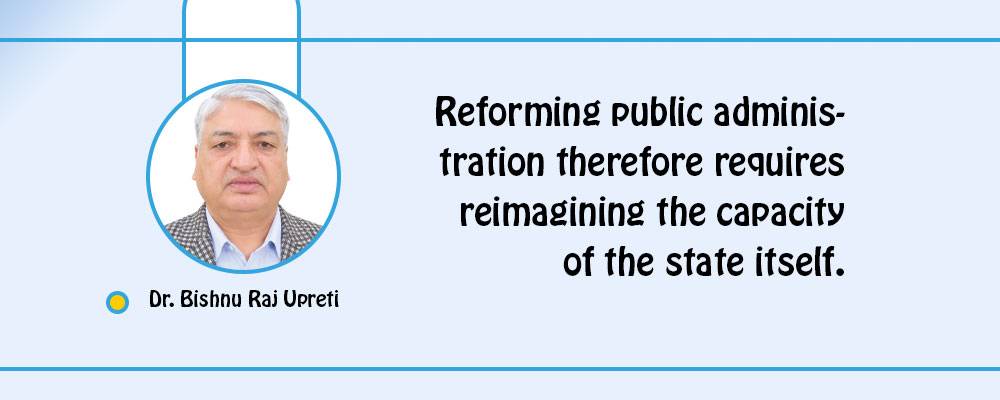
State capacity is the fundamental condition for a state to convert constitutional authority, democratic mandates, public policies, and development commitments into tangible outcomes for its citizens. Yet, much of Nepal's public administration discourse examines administrative performance as an organizational or procedural issue.
In contrast, the deeper question of whether the state has the institutional capacity to formulate, coordinate, finance, implement, monitor, and enforce public services and decisions receives little attention. This article hypothesizes that strong state capacity is a precondition for effective public administration, and that the quality of public administration is one of the principal mechanisms through which state capacity is translated into democratic legitimacy and development outcomes in post-federal Nepal.
More politics
- Sugar supplies assured for Tihar, but LPG shortages persistKathmandu Post
- New Zealand preliminary vote leaves unclear who will governKathmandu Post
- Your guide to this week’s cultural events in Kathmandu ValleyKathmandu Post
- We’ve been best friends with dogs for thousands of years. Here’s how it beganKathmandu Post
- David Warner lifts TU as Kathmandu hand Lumbini their first defeat of the seasonKathmandu Post
- Nepal’s 250-year-old foreign policy still works. Why does no one use it?Kathmandu Post